by: Dr. Dawn Martin, DVM, DVSc, DipACVIM
Many of us are aware of endoscopy in human health, but this key medical procedure is also available for our furry friends! An endoscope is essentially a flexible camera that can be used to view areas of the body that are difficult to see from the outside, and at the same time biopsy and fluid samples can be collected using a special access port in the endoscope. Common areas that can be investigated using endoscopy include the inside of the gastrointestinal tract (stomach, upper small intestine and all areas of the colon); the nasal cavity; the lower respiratory tract (trachea and the bronchial tree), and the urinary system (bladder and urethra).
The most important advantage of endoscopy is that it is non invasive and carries a very low risk of complications. General anesthesia is required for these procedures, therefore, blood work and chest x-rays are usually advised to ensure that the patient is a good candidate to receive anesthesia.
Gastrointestinal endoscopy:
Gastrointestinal endoscopy is often used in dogs and cats to investigate for causes of vomiting and diarrhea, which may include inflammatory bowel disease, lymphangiectasia (a disease affecting the lymph drainage from the intestine) or cancer. In many cases, the upper (stomach and small intestine) as well as the colon (colonoscopy), is performed under the same anesthesia. Foreign objects such as toys, carpet, cloth, or pieces of bone, in the stomach and in the esophagus can often be retrieved from these areas using the endoscope, without surgery. Bones can be particularly dangerous if they become lodged in the esophagus as they can cause significant damage to the lining of the esophagus, and can even cause perforation. If a foreign object advances into the lower small intestinal tract, the potential for endoscopic recovery is lost.
Retrieving multiple foreign objects from a Labrador retriever stomach after he ate Halloween candy- and the plastic bag!

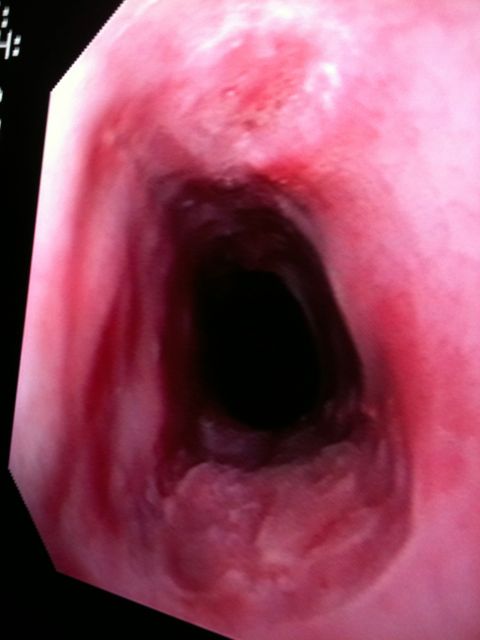
The image below shows damage to the esophagus after removal of a bone that was stuck in the esophagus; note the areas of ulceration at 12 and 6 o’clock.
Nasal cavity:
Endoscopy of the nose (or rhinoscopy) can be performed in both dogs and cats to investigate causes of nasal discharge, sneezing, or nosebleeds. In both cats and dogs, foreign objects can gain entrance to the nasal cavity from either the front of the nose (by sniffing) or by chewing on an object then coughing it into the back of the nasal cavity, above the palate. The foreign objects are irritating to the nose, resulting in a variety of symptoms including sneezing, rubbing of the nose, and a variable amount of discharge that is often from a single nostril. Cats may have rhinitis that may progress over time and cause severe sneezing and discharge. Unfortunately, both cats and dogs develop tumors of the nose. At the time of rhinoscopy, biopsies are harvested and submitted to a lab.
The back of a normal nose as seen with a rhinoscope.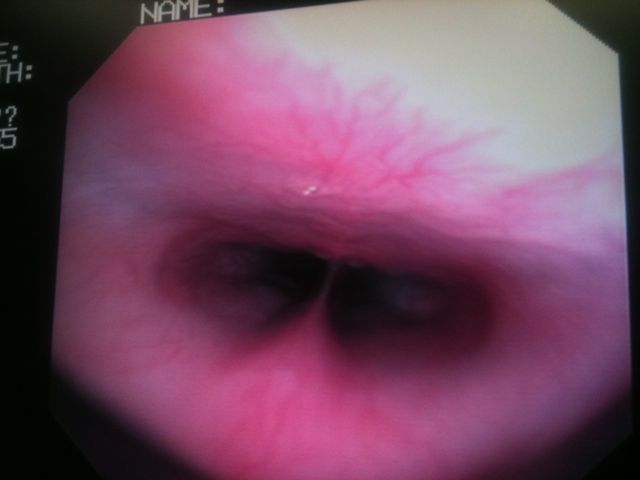
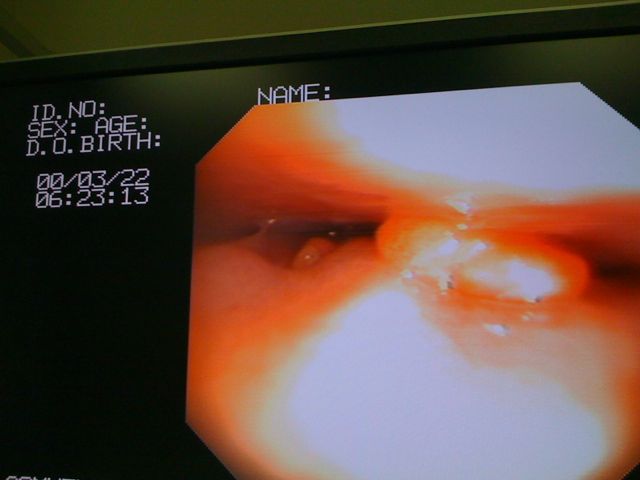
The back of a nose with a mass present; this mass was a benign polyp.
Respiratory tract:
Endoscopy of the trachea and bronchial tree is performed to investigate coughing, especially in patients in whom there are changes apparent on thoracic radiographs (x-rays). A bronchoscope is passed into the trachea through the mouth, then passed down into the bronchi. A common disease of small dogs is tracheal collapse, which causes a goose honking cough, and the severity of this disease is best assessed by tracheoscopy. The lining of the respiratory tract is evaluated for any tumors or inflammation. A sample of sterile fluid is inserted and withdrawn for testing, to look for findings indicating pneumonia or bronchitis. This test allows us to quickly identify and treat the causes of coughing in our patients.
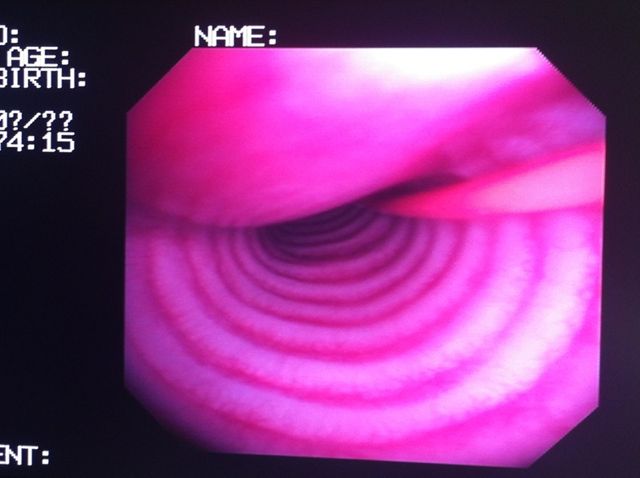
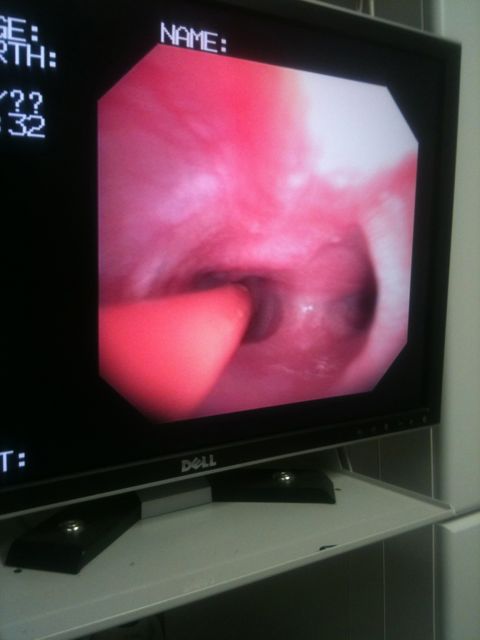
Tracheal collapse in a small dog seen from inside the ‘windpipe’. The red object is a catheter placed to supply oxygen during the procedure.
Mainstem bronchi, with a red rubber catheter placed deeper into the lower airway to collect a fluid sample.
Urinary tract:
Endoscopy of the urinary tract (or cystoscopy) is used less commonly then the other types, as many of the diseases of this system are better assessed using ultrasound. However, cystoscopy can be used to investigate for congenital problems (a condition called ectopic ureter) in young dogs, or tumors or diseases of the urethra in older animals that are difficult to visualize by other means.
In summary, endoscopy for pets is a safe and non-invasive diagnostic technique that in many cases can contribute to maintaining your animal’s health and well being!